The Movies You Never Got to See
Every movie you have ever watched in a cinema was a compromise. That sounds dramatic, but it is true. Somewhere between the director yelling "cut" for the final time and the film hitting your local multiplex, a version of that movie existed that nobody outside a small group of editors, producers and studio executives ever got to see. A rougher version. A longer version. Sometimes a completely different film. These are directors cut movies, workprints, and alternate versions, and they have been quietly reshaping cinema for decades. Some of them rescued films from mediocrity. Some of them proved the studio was right all along. And a handful of them became so legendary that they overshadowed the original release entirely.
Here is a look at the ones that matter most.
What Is a Director's Cut, Exactly?
The term gets thrown around loosely, but it actually has a specific origin. Under the Directors Guild of America rules, every director is contractually guaranteed around six weeks to assemble their own cut of the film without studio interference. That version, the one the director puts together before the studio starts making changes, is technically the "director's cut."
The problem is that most audiences never see it. Studios have final cut privilege on almost every major release, which means they can (and frequently do) override the director's edit. Scenes get trimmed. Endings get changed. Voiceovers get added. By the time the film reaches cinemas, it might look very different from what the director intended.
When a "director's cut" eventually gets released on home video or in a theatrical re-release, what you are actually seeing is the director's attempt to restore their original vision, sometimes decades after the fact.
Then there is the workprint. This is even rarer. A workprint is an early, unfinished version of a film, often with temporary music, incomplete visual effects and rough edits. They almost never see the light of day. When they do, it is usually through a leak or an accidental screening, and they become the stuff of film nerd legend.
Blade Runner: The Film That Could Not Stop Changing
No conversation about alternate cuts is complete without Blade Runner. Ridley Scott's 1982 sci-fi film has gone through a staggering seven distinct versions over 25 years, making it arguably the most re-edited film in Hollywood history.
The theatrical cut featured a voiceover narration from Harrison Ford that neither he nor Scott wanted. Ford has openly admitted he was not giving it his best effort during those recording sessions. The studio also tacked on a "happy ending" that showed Deckard and Rachel driving through idyllic countryside, a sequence that completely undermined the film's tone.
A workprint version surfaced at film festivals in 1990 and 1991, generating huge buzz and prompting Warner Bros. to work with Scott on a proper director's cut in 1992. That version ditched the voiceover and the happy ending, but Scott still was not fully satisfied.
It was not until 2007, a full 25 years after the original release, that Scott finally got complete creative control and produced The Final Cut. That version is now widely considered the definitive one, and it includes a sequence that strongly implies that Ford's character, Deckard, is himself a replicant, a question the earlier versions deliberately left open.
Seven versions. Twenty-five years. One film. That is what happens when a director's vision and a studio's commercial instincts collide.
The Cobra Workprint: Stallone Uncut
Speaking of workprints that took on a life of their own, the Cobra workprint is one of the most fascinating cases in 80s action cinema. Sylvester Stallone's 1986 action film was originally conceived as a much longer, harder, more violent picture. The theatrical cut runs a brisk 87 minutes, but early versions of the film were reportedly significantly longer, with additional character development, extended action sequences and a nastier edge.
The workprint, which has circulated among collectors for years, reveals a very different film from the one audiences saw in cinemas. Additional scenes, alternate takes and a generally rougher, more uncompromising tone paint a picture of what Stallone originally had in mind before the studio trimmed it down for a wider audience.
For fans of 80s action, the Cobra workprint is a genuine curiosity, a glimpse at an alternate timeline where one of the decade's most polarising action films might have been something much more ambitious.
Aliens: The 17 Minutes That Changed Everything
James Cameron is generally known for getting his way in the editing room, but even he had to make concessions on Aliens. The 1986 theatrical cut was already a masterpiece, but a Special Edition released in 1990 restored 17 minutes of footage that Cameron had reluctantly removed.
Those 17 minutes are a masterclass in tension building and character work. The restored footage includes scenes of the colony on LV-426 before the xenomorph attack, giving the audience a sense of the community that is about to be destroyed. There is also an extended sequence in which Ripley learns of her daughter's death, adding an entirely new emotional dimension to her relationship with Newt.
It is one of those rare cases where the longer version is genuinely, measurably better. The theatrical cut is a great action film. The Special Edition is a great film, full stop.
Apocalypse Now: Three Cuts, One War
Francis Ford Coppola has wrestled with Apocalypse Now for the better part of five decades. The original 1979 theatrical cut ran 147 minutes and was already the product of one of cinema history's most notoriously troubled productions.
In 2001, Coppola released Apocalypse Now Redux, adding nearly 50 minutes of footage, including an entire French plantation sequence. The additions divided audiences, with some feeling the extra material added depth and others arguing it destroyed the pacing of an already long film.
Coppola returned to the editing suite yet again in 2019 for the Final Cut, trimming about 14 minutes from the Redux version. He has said this version is the closest to what he originally envisioned. Three cuts, spanning 40 years, of one of cinema's most ambitious projects.
Kingdom of Heaven: From Forgettable to Epic
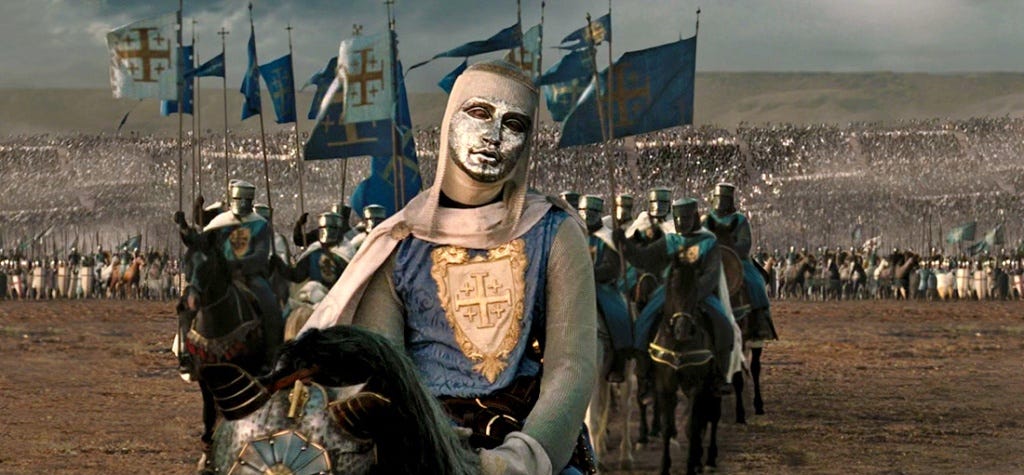
Not every director's cut rescues a misunderstood classic, but Ridley Scott's Kingdom of Heaven comes close. The 2005 theatrical cut was considered a bland, forgettable swords-and-sandals film. Scott's director's cut, released the following year, added roughly 45 minutes and transformed it into something genuinely compelling.
The restored footage fleshed out characters who had been reduced to cardboard in the theatrical version. Subplots that made no sense suddenly had context. The result is one of the most dramatic quality gaps between a theatrical cut and a director's cut in modern cinema.
Why This Matters
Director's cuts and workprints are not just curiosities for obsessive film fans. They tell us something important about how movies get made and how the tension between artistic vision and commercial reality shapes the films we end up watching.
Every time you sit down to watch a film, you are watching a negotiation. Between the director and the studio. Between what the story needed and what the marketing department thought would sell. Between the three-hour epic a filmmaker dreamed of and the two-hour product that had to fit into a multiplex screening schedule.
The best director's cuts remind us that the version we saw first was not always the best version. And sometimes, the movie you never got to see was the one that should have been in cinemas all along.
Born to Watch is a movie podcast where we review the films that shaped us, from 80s action to modern classics. New episodes weekly on Spotify, Apple Podcasts and all good podcast platforms.
Find us at borntowatch.com.au or follow @borntowatch on Instagram.

The Video Shop Owner
Matt White, affectionately known as "Whitey" on the "Born to Watch" podcast, epitomises a cinematic sage. Classics like Star Wars, Jaws, and Willy Wonka and the Chocolate Factory sparked his passion for film at a tender age. These films not only captivated him but also moulded his path in life. While briefly flirting with creative arts himself, Matt soon realised his true calling was not in starring in or producing movies but in sharing them. This realisation led him to his true vocation as the guiding light for others’ film explorations.
Taking this passion to a professional level, Matt once owned a video rental store, turning a simple business into a thriving hub for movie enthusiasts. There, he did more than rent out films; he curated cinematic experiences. His shop became a local cornerstone where he imparted his vast knowledge, enthusiastically recommending films that catered to his customers' unique tastes.
Beyond the counters of his now-closed store, Matt's joy in movies is most vividly seen at home. Watching films with his kids, he delights in their reactions, finding profound satisfaction in passing on his love for movies to the next generation. On "Born to Watch," Whitey is more than a host; he’s a mentor, sharing his passion project with listeners and inviting them to join him on a journey through the world of film.

Why Evil Ed Ruins Fright Night 1985 (And Why We Can't Look Away)