Why Cannon Films Made the Best Bad Movies Ever

In 1984, a single film studio released 42 movies in one calendar year. Not a major Hollywood studio. Not Warner Bros., Paramount, or Universal. An independent production company run by two Israeli cousins operating out of a nondescript office building, fuelled by ambition, audacity and an almost pathological refusal to slow down. That studio was Cannon Films. And for a glorious stretch of the 1980s, Menahem Golan and Yoram Globus made the most entertaining bad movies the world has ever seen.
The Go-Go Boys
Before they conquered Hollywood (or at least rented a room in it), Golan and Globus had already built a film industry almost from scratch in Israel. They produced dozens of films in their home country, learning the most important lesson of B-movie filmmaking: speed is everything.
When they purchased the struggling Cannon Group in 1979, they brought that philosophy with them. Films were greenlit on the back of a poster concept. Scripts were sometimes written during production. Budgets were kept brutally low, and the gap between a film's conception and its release in cinemas was measured in months, not years.
Their nickname, "the Go-Go Boys," was not ironic. By the mid-80s, Cannon had become the largest independent production company in the world, with a net worth reportedly exceeding a billion dollars. They were putting out more movies per year than some major studios managed in three.
The Formula
Cannon's business model was brilliantly simple. They would pre-sell distribution rights to foreign territories based on nothing more than a poster, a star name and a concept. By the time cameras rolled, the film was often already in profit. Home video rights covered the rest. It was a system designed to be virtually failure-proof, at least financially.
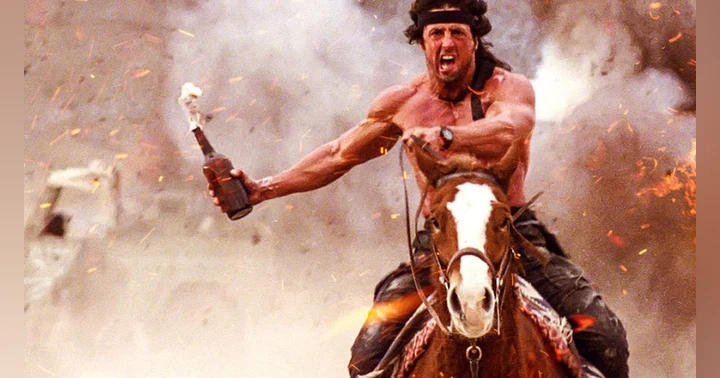
Creatively, the formula was just as straightforward. Find a trend. Copy it. Release it before anyone else can. When Raiders of the Lost Ark was a hit, Cannon produced King Solomon's Mines. When Rambo took off, they rushed Missing in Action into production with Chuck Norris. When Enter the Ninja performed well, they produced Revenge of the Ninja and then Ninja III: The Domination in rapid succession, milking the ninja craze for every cent it was worth.
The films were not subtle. They were not prestigious. But they were relentlessly entertaining, and they arrived in video stores at a pace that kept shelves perpetually stocked with fresh Cannon product.
The Stars
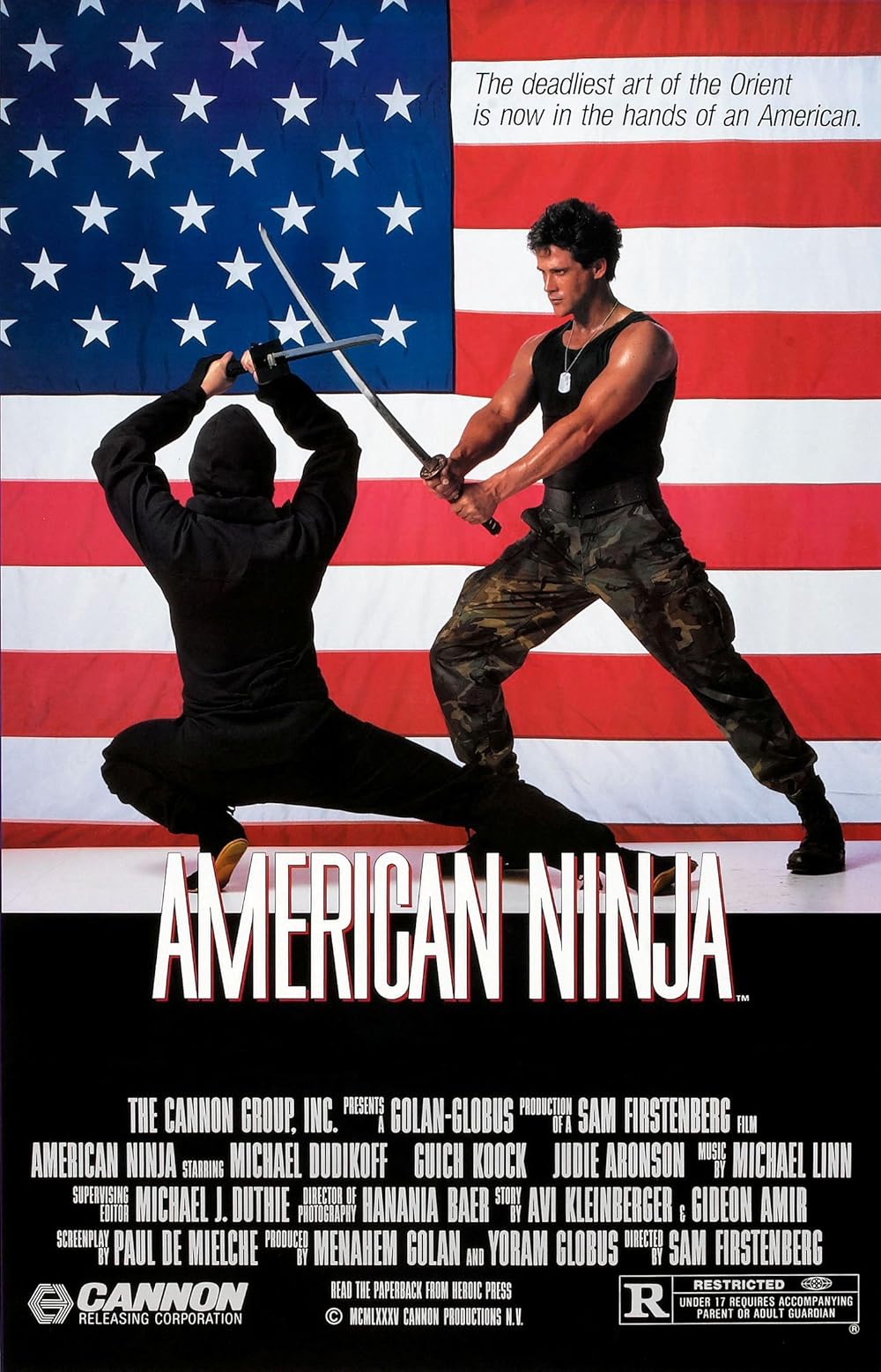
Cannon had a roster of action stars who were, to put it diplomatically, not in demand at the major studios. Chuck Norris became their most bankable name, starring in the Missing in Action and Delta Force franchises and later the television series Walker: Texas Ranger. Charles Bronson continued his Death Wish saga through three increasingly unhinged sequels. Michael Dudikoff was positioned as a leading man despite possessing the on-screen charisma of a well-built mannequin.
And then there was Jean-Claude Van Damme. Cannon gave him his big break with Bloodsport in 1988, a film that launched an entire career and proved that the studio had at least some eye for emerging talent.
But the true Cannon star was not any individual actor. It was the studio itself. When you saw that Cannon logo before a film, you knew exactly what you were getting: ninety minutes of questionable acting, enthusiastic violence and just enough charm to keep you watching until the credits rolled.
The Swing for the Fences
Here is where the Cannon story gets genuinely fascinating. Golan and Globus were not content to just churn out B-movies forever. They wanted to be taken seriously. And so, alongside the ninja films and the Chuck Norris vehicles, they started funding projects that had no business being made by a company known for Death Wish sequels.
They produced Runaway Train, based on a screenplay by Akira Kurosawa, which earned Jon Voight an Academy Award nomination. They funded Barfly, starring Mickey Rourke and Faye Dunaway in a film about the life of poet Charles Bukowski. They distributed The Company of Wolves in the United States. They even produced The Assault, which won the Golden Globe for Best Foreign Language Film.
Roger Ebert once said that no other production organisation in the world had taken more chances with serious, marginal films than Cannon. Coming from the same studio that produced American Ninja, that is a remarkable statement.
The Fall
The ambition that made Cannon great was also what destroyed it. Golan and Globus could not help themselves. They kept swinging bigger.
They acquired the rights to Spider-Man and, at one point, had James Cameron attached to direct. They produced Superman IV: The Quest for Peace, a film so catastrophically underfunded that its special effects looked worse than those in the original 1978 Superman. They attempted to make Masters of the Universe a legitimate franchise. They spent money they did not have on projects that could not possibly recoup their costs.
Superman IV, released in 1987, is widely considered the tipping point. The film was a commercial and critical disaster, and it exposed the fundamental fragility of Cannon's business model: when a film actually needed to perform at the box office rather than just coast on pre-sales and video rights, the studio's low-budget approach fell apart spectacularly.
By 1989, Golan and Globus had left the company. Cannon limped along for a few more years before finally closing up shop in the late 1990s. The Go-Go Boys had gone.
The Legacy
Here is the thing about Cannon Films that critics and film historians often miss: the studio was not successful despite making bad movies. It was successful because it understood something fundamental about what audiences actually wanted.
Not every film needs to be a masterpiece. Not every trip to the video store needs to result in a life-changing cinematic experience. Sometimes you want to watch Chuck Norris on a rocket-launcher-equipped motorcycle. Sometimes you want to see a ninja fight in a shopping mall. Sometimes you want ninety minutes of pure, unpretentious entertainment that does exactly what the VHS cover promised.
Cannon Films delivered that experience more consistently than any studio in history. They were shameless, opportunistic, frequently terrible and absolutely essential to the 80s action landscape.
The major studios gave us the blockbusters. Cannon gave us the Friday night rentals. And if you grew up in the 80s, you probably have fonder memories of the rentals.
Born to Watch has reviewed several Cannon Films productions on the podcast, including American Ninja and Cobra. Want to hear the crew's verdict? Find us on Spotify, Apple Podcasts and all good podcast platforms.
Visit borntowatch.com.au or follow @borntowatch on Instagram.

The Black Belt in 80's Martial Arts Movies
Gow is a force both in the dojo and in film discussions, especially when it comes to martial arts movies. Growing up , Gow found his own unique way of rebellion. Hidden in a cardboard box, he kept his collection of hard-hitting martial arts VHS tapes—a cache of cinematic adrenaline that shaped his tastes and future.
Under the tutelage of the renowned Sensei Mark Greville, Gow honed his physical skills in Kyokushin Karate and quickly rose through the ranks, mastering the demands of this intense discipline. His prowess in martial arts parallels his critical acumen, which he brings to every episode of the podcast.
In his youth, Gow was known for his charm, baby teeth, and taste for adventure, traits that saw him carry the weight of conquests during the 1990s. His penchant for beautiful women saw "90's Gow" as a force to be reckoned with around the globe. He channels that energy into being a dedicated family man today. On "Born to Watch," he is revered as the 'Stats Man,' beloved for his ability to spit facts with precision and always tell it like it is.
Gow's presence on the podcast is pivotal; his keen insights and occasional stern glance can either straighten out the conversation or send it spiralling into delightful chaos. The second most experienced host on the show, without Gow, Born to Watch wouldn't be the same.

Why Evil Ed Ruins Fright Night 1985 (And Why We Can't Look Away)