How Elmore Leonard's Writing Rules Shaped Get Shorty's Iconic Dialogue
Discover how legendary crime novelist Elmore Leonard's strict minimalist writing rules laid the foundation for Get Shorty's effortless banter. This deep dive explores why the 1995 film's dialogue remains a masterclass in screenwriting, proving that natural rhythm and stripped-back exposition outlast traditional action tropes.
Key Takeaways
- Elmore Leonard's cardinal writing rule was simple: if it sounds like writing, rewrite it.
- Get Shorty was famously cited by Leonard as his absolute favourite screen adaptation of his work.
- John Travolta actively fought to preserve Leonard's specific vernacular and rhythm on set.
- The film's rejection of heavy exposition mirrors Leonard's minimalist prose style.
- Naturalistic banter replaces traditional action tropes, driving both the comedy and the tension.
The Elmore Leonard Writing Philosophy in Hollywood
When adapting a celebrated crime novel for the big screen, Hollywood usually treats the source material like raw clay, molding, stretching, and flattening it until it fits standard three-act action formulas. Yet, 1995's Get Shorty managed to break the mold. Much of this success stems from respecting the distinct literary blueprint laid down by Elmore Leonard. Leonard wasn't just a pulp writer; he was a master stylist who treated dialogue like musical composition. His books moved with a rhythmic bounce that felt entirely improvised, even though every single comma was meticulously placed.
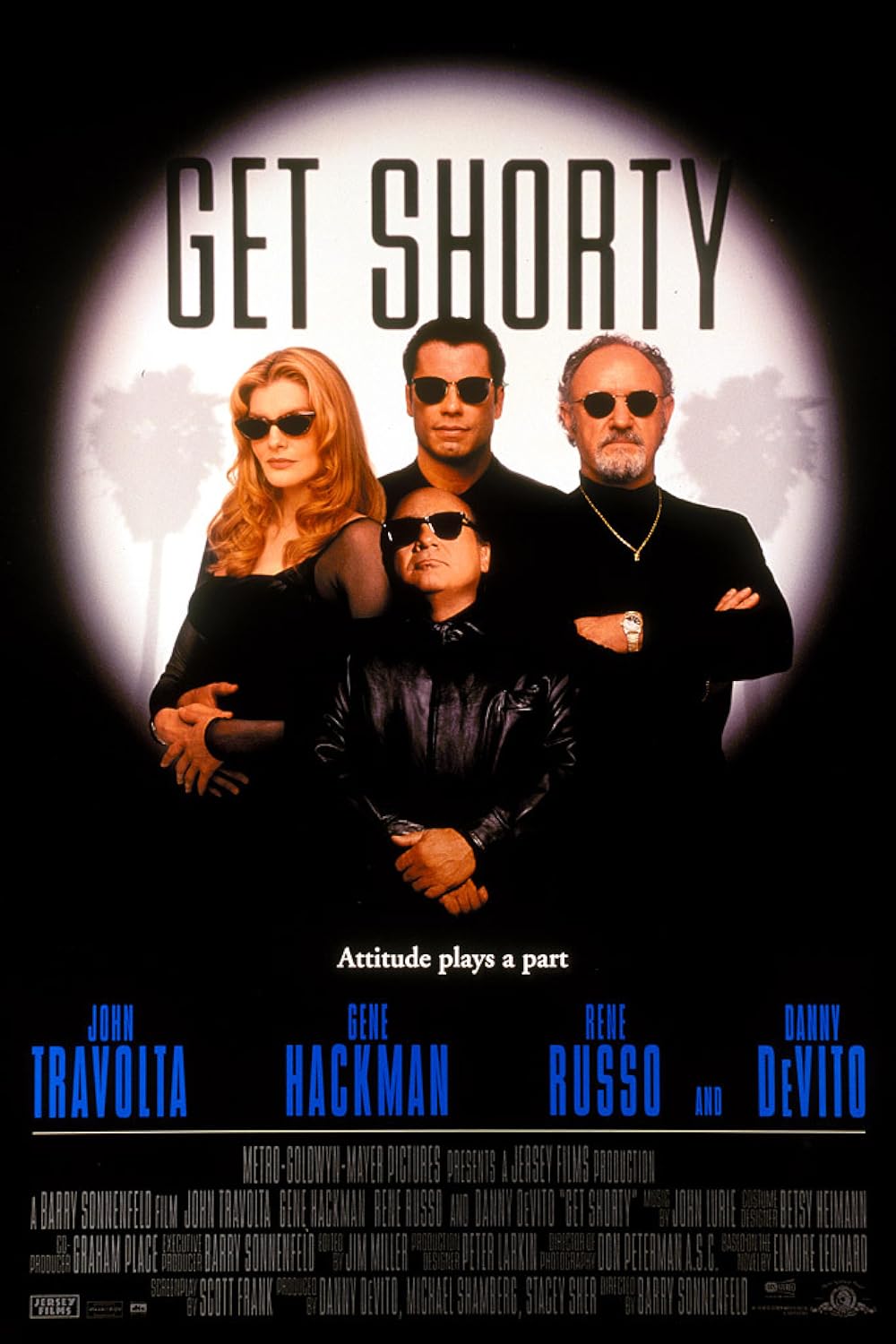
In the cinematic adaptation directed by Barry Sonnenfeld, that literary rhythm survived intact. Instead of padding scenes with heavy-handed exposition to explain character motivations, the film drops viewers right into the deep end of loan shark Chili Palmer's world. People talk about mundane things, negotiate territory, or trade pop-culture movie quotes with the exact same deadpan cadence. The dialogue doesn't sound like it was engineered in a writers' room by committee; it sounds like real people talking past each other while navigating absurd, high-stakes environments.
If It Sounds Like Writing, Rewrite It
The core of Leonard's legendary writing style is his famous 10-rule manifesto for writing fiction, which boils down to transparency. He believed that the moment a reader notices the author trying too hard to write poetically, the illusion breaks. Characters shouldn't give speeches; they should converse. They shouldn't announce their inner emotional states; they should reveal them through casual insults, defensive posturing, and momentary pauses.
In Get Shorty, this philosophy manifests in how characters negotiate power dynamics. When Gene Hackman's beleaguered B-movie producer Harry Zimm argues with Delroy Lindo's ruthless heavy Bo Catlett, the threats are delivered with an eerie, almost conversational calm. There are no operatic monologues or cartoonish villain speeches. They talk about financing, bad scripts, and personal grievances as if they were discussing real estate or bad weather. This grounding is precisely what makes the comedy work so well—the absurdity of the movie business collides with the gritty pragmatism of organized crime, and the dialogue serves as the bridge between those two colliding worlds.
John Travolta and the Art of the Cool Delivery
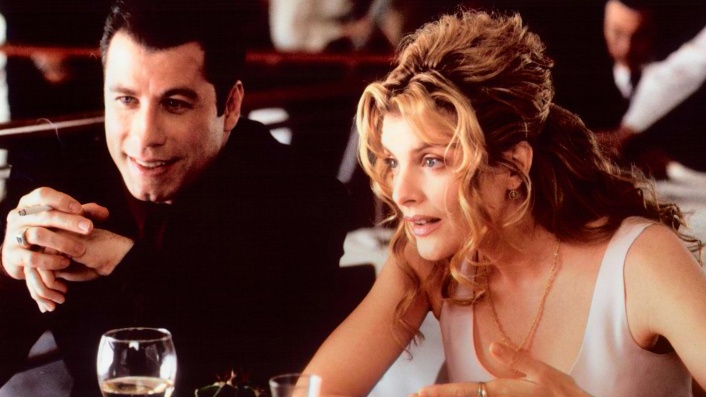
Having great dialogue on the page is only half the battle; an actor has to know how to throw it away without losing its punch. Fresh off his mid-90s resurgence, John Travolta understood the assignment completely when he stepped into Chili Palmer's tailored leather jacket. Playing a loan shark who treats Hollywood movie studios with the exact same professional detachment he brings to collecting debts, Travolta mastered Leonard's minimalist style.
Reportedly, Travolta was fiercely protective of Leonard's vernacular during production. He recognized that Chili's coolness didn't come from firing guns or shouting intimidation tactics; it came from his absolute refusal to be flustered. While characters like Dennis Farina's Ray "Bones" Barboni scream and rage because they want their money and cannot comprehend why everyone is obsessed with making motion pictures, Chili plays it straight. He listens, assesses, and delivers lines with an economy of words that forces everyone else in the room to fill the uncomfortable silence.
The Evolution of 90s Crime Dialogue
The mid-1990s were an incredible era for stylish, dialogue-heavy crime films, largely thanks to the wave kicked off by Quentin Tarantino and sustained by writers like Leonard. But while Tarantino's dialogue often revels in long, pop-culture-infused digressions, Leonard's approach in Get Shorty is much leaner. Every line has a job to do. It either establishes character dominance, shifts the power in a negotiation, or lands a dry punchline.
Consider the famous interactions between Chili Palmer and Martin Weir, the egomaniacal movie star played brilliantly by Danny DeVito. Weir wants to study Chili to learn how to play a tough guy, completely unaware that Chili views Hollywood actors as massive children playing dress-up. The verbal sparring match between them avoids all the standard cliches of the genre. Instead of trading macho insults, they trade professional critiques, treating underworld violence and cinematic art as two sides of the same crooked coin.
Why Get Shorty Remains a Masterclass in Adaptation
It is rare for an author to genuinely love the film adaptation of their book, let alone call it their favorite. Elmore Leonard's endorsement of Get Shorty speaks volumes about the care taken by screenwriter Scott Frank and director Barry Sonnenfeld. They understood that the soul of the story wasn't just the plot mechanics of loan sharks and bad movie deals—it was the vernacular. It was the specific music of the American underworld crashing headfirst into the vanity of Southern California.
By treating the dialogue as sacred text rather than a rough draft to be rewritten for commercial appeal, the filmmakers preserved the cynical, witty, and effortlessly cool tone that made the novel a masterpiece. It proves that when you trust an audience to keep up with fast, smart, exposition-free conversation, the cinematic reward is exponentially higher.
If you want to hear a deeper dive into how this classic crime comedy holds up today, along with more insights into the cast, behind-the-scenes trivia, and a celebration of 90s cinema, Listen to the full episode of Born To Watch - A Movie Review Podcast. Join the boys as they break down every sharp line, career-defining performance, and eccentric character that makes this film an enduring classic.
Frequently Asked Questions
What was Elmore Leonard's golden rule for writing dialogue?
Leonard famously advised writers to avoid unnecessary exposition and stick to a single philosophy: if your writing sounds like writing, rewrite it. He focused on capturing the actual rhythm and cadence of human speech rather than forcing literary flourishes.
Did Elmore Leonard like the Get Shorty movie adaptation?
Yes, Get Shorty was famously Elmore Leonard's absolute favourite screen adaptation of his own novels. He deeply appreciated how the filmmakers preserved his distinct vernacular, character dynamics, and deadpan humour.
How did John Travolta influence the script's dialogue?
As Chili Palmer, John Travolta was fiercely protective of Leonard's source text during production. He fought to keep the character's understated, unflappable delivery intact, ensuring Chili's coolness came from economy of words rather than loud intimidation.
Why is Get Shorty considered distinct from other 90s crime movies?
Unlike many 90s crime films that relied on hyper-stylized, rambling monologues or over-the-top action sequences, Get Shorty relies on lean, pragmatic banter and dry workplace comedy set against the backdrop of the film industry.

The Video Shop Owner
Matt White, affectionately known as "Whitey" on the "Born to Watch" podcast, epitomises a cinematic sage. Classics like Star Wars, Jaws, and Willy Wonka and the Chocolate Factory sparked his passion for film at a tender age. These films not only captivated him but also moulded his path in life. While briefly flirting with creative arts himself, Matt soon realised his true calling was not in starring in or producing movies but in sharing them. This realisation led him to his true vocation as the guiding light for others’ film explorations.
Taking this passion to a professional level, Matt once owned a video rental store, turning a simple business into a thriving hub for movie enthusiasts. There, he did more than rent out films; he curated cinematic experiences. His shop became a local cornerstone where he imparted his vast knowledge, enthusiastically recommending films that catered to his customers' unique tastes.
Beyond the counters of his now-closed store, Matt's joy in movies is most vividly seen at home. Watching films with his kids, he delights in their reactions, finding profound satisfaction in passing on his love for movies to the next generation. On "Born to Watch," Whitey is more than a host; he’s a mentor, sharing his passion project with listeners and inviting them to join him on a journey through the world of film.

Why Evil Ed Ruins Fright Night 1985 (And Why We Can't Look Away)