Wayne's World (1992)
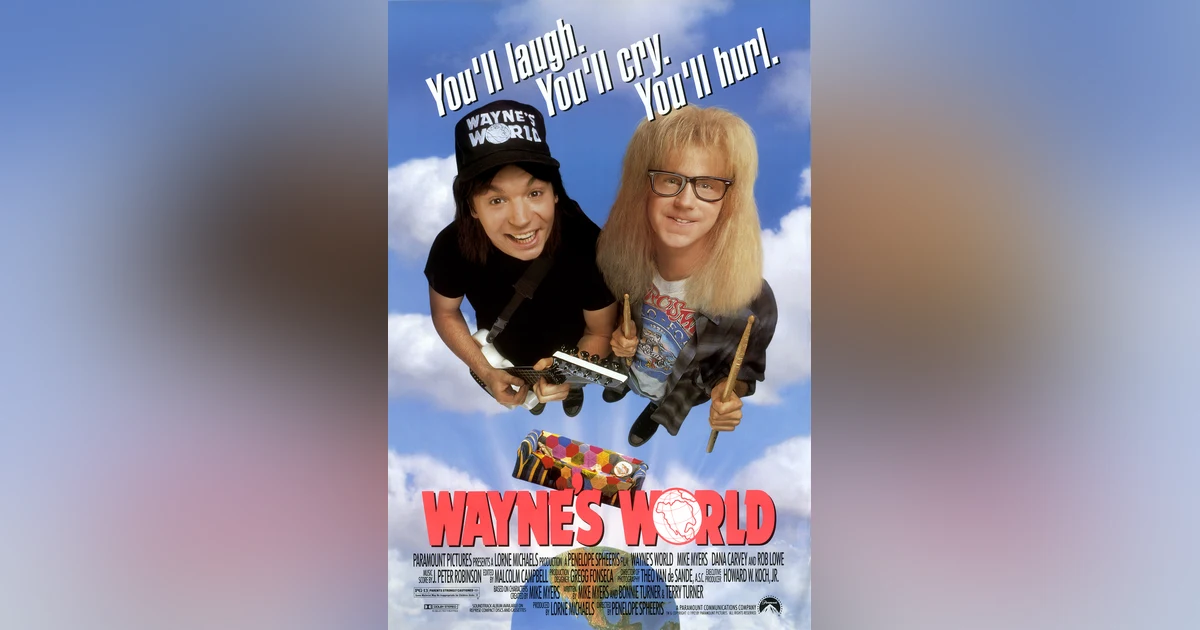
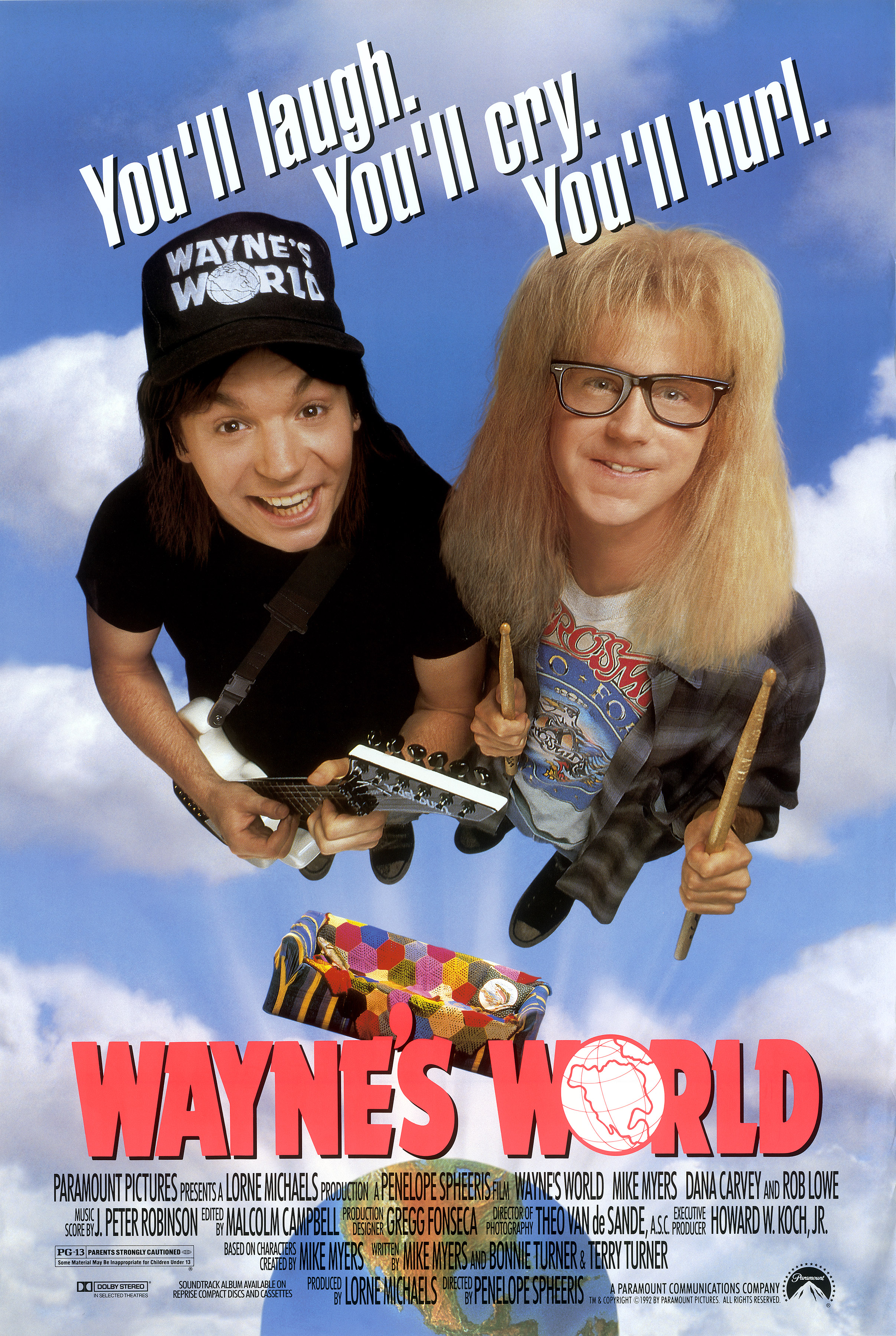


"Wayne's World (1992)," a film that transcended its "Saturday Night Live" sketch origins to become a cult classic, encapsulates the early '90s like few other movies do. Directed by Penelope Spheeris and starring Mike Myers and Dana Carvey as Wayne Campbell and Garth Algar, respectively, the film is a brilliant blend of humour, music, and a touch of innocence, all wrapped up in a storyline that's both engaging and hilariously absurd.
At its core, "Wayne's World" is a story about friendship, dreams, and the pursuit of happiness in the face of corporate influence. Wayne and Garth are two slackers from Aurora, Illinois, who run a public-access television show from Wayne's basement. Their show, also titled "Wayne's World," is a local hit, catching the eye of television producer Benjamin Kane, played with smarmy charm by Rob Lowe. Kane offers to buy the rights to the show, promising fame and fortune. However, as Wayne and Garth soon discover, the road to success is fraught with sellouts, betrayals, and the potential loss of what they value most: their authenticity and creative control.
The film is a riot from start to finish, thanks to Myers and Carvey's impeccable chemistry and their characters' endearing goofiness. Wayne's catchphrases, like "Party on!" and "Excellent!", became part of the cultural lexicon, while Garth's shy, awkward demeanour is the perfect foil to Wayne's exuberant personality. Their adventures, or misadventures, are filled with memorable moments, including their encounter with Alice Cooper, the "Bohemian Rhapsody" car scene that revitalised Queen's song, and Wayne's dream sequences that are both bizarre and hilariously offbeat.
One of the film's strengths is its self-awareness. "Wayne's World" frequently breaks the fourth wall, with Wayne and Garth directly addressing the audience, making us complicit in their antics. This technique adds a layer of intimacy and immediacy to the film, drawing the viewer deeper into its world. It's a clever device that Spheeris and the writers use to great effect, allowing the film to comment on its own absurdity and the nature of television and film production.
The supporting cast adds depth and colour to the film. Tia Carrere's performance as Cassandra, a talented musician and Wayne's love interest, brings a welcome dimension to the story, challenging Wayne to grow and consider his priorities. Her subplot, involving a record deal that's more about image than talent, mirrors Wayne and Garth's struggles with the television industry. Meanwhile, characters like Ed O'Neill's morose donut shop manager and Lara Flynn Boyle's obsessed ex-girlfriend provide additional comedic highlights.
However, "Wayne's World" is not just a string of jokes and catchphrases. It's a commentary on the early '90s media landscape, the commodification of grassroots culture, and the eternal struggle between artistic integrity and commercial success. The film's climax, with its multiple endings, underscores the power of choice and the importance of staying true to one's values, even in the face of overwhelming pressure to conform.
Technically, the film is a product of its time, with a soundtrack that's a mix of rock anthems and power ballads that perfectly encapsulate the era. The cinematography and editing are straightforward, serving the story without drawing attention away from the characters and their world. It's a testament to Spheeris's direction that the film feels both timeless and distinctly of its time, a snapshot of a cultural moment that continues to resonate with audiences today.
In conclusion, "Wayne's World" is more than just a comedy; it's a cultural artifact that captures the zeitgeist of the early '90s with wit, warmth, and a genuine love for its characters and their world. Its appeal lies not just in its humour, but in its heart, its commentary on the media industry, and its celebration of creativity and friendship. As Wayne and Garth would say, "Wayne's World" is not just excellent, it's a party time that continues to charm and entertain audiences, making it a deserving classic in the comedy genre.
Please follow the Podcast and join our community at
https://linktr.ee/borntowatchpodcast
If you are looking to start a podcast and want a host or get guests to pipe in remotely, look no further than Riverside.fm
Click the link below
https://riverside.fm/?utm_campaign=campaign_1&utm_medium=affiliate&utm_source=rewardful&via=matthew

Will "The Worky"
The youngest member of the Born to Watch family, with an entire decade separating him from the old blokes he calls mates, Will "The Worky" somehow manages to keep the boys young while making them feel ancient.
By trade, Will is a plumber and owner of WPH Plumbing, but those who know him best understand that his true passion is hot water systems. Some men simply install them. Will loves them. His unhealthy obsession with all things hot water has become the stuff of legend, and there are whispers that he knows the serial numbers of his favourites by heart.
When he's not saving households from cold showers and plumbing disasters, you'll find him chasing waves. A keen surfer with salt water in his veins, Will is equally at home in the ocean as he is under a house. Although he'd probably tell you both are preferable to listening to Whitey explain another 80s action movie ranking.
Despite being the youngest member of the crew, Will's stories are legendary, none more so than the tales of his father and his lifelong love affair with martial arts. Whether it's karate, kung fu, or another unbelievable yarn from his family archives, these stories have become cherished moments amongst the Born to Watch faithful and are often as entertaining as the movies themselves.
Will brings a fresh perspective to the show. He doesn't care much for film school theories or artsy symbolism. He just wants to know if the movie is any good, if the action delivers, and if it's worthy of a re… Read More


