The Breakfast Club (1985)
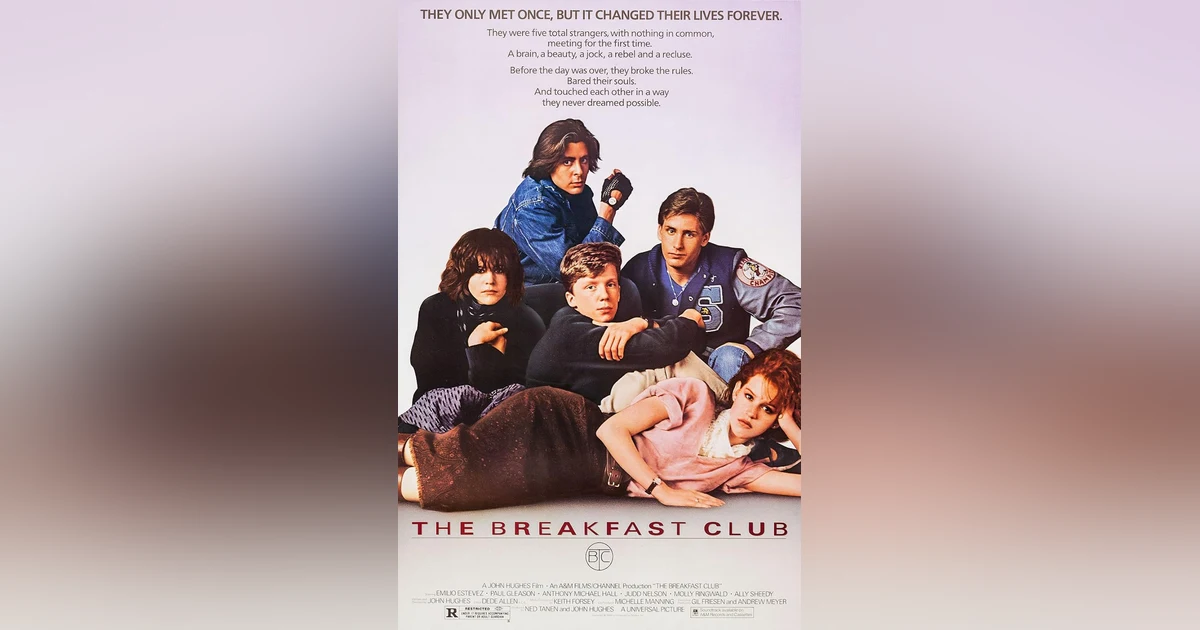


"The Breakfast Club," directed by John Hughes, is a seminal film of the 1980s that has transcended its era to become a timeless classic. This 1985 masterpiece delves into the lives of five high school students who, on the surface, embody the quintessential teenage stereotypes: the Brain (Anthony Michael Hall as Brian), the Athlete (Emilio Estevez as Andrew), the Basket Case (Ally Sheedy as Allison), the Princess (Molly Ringwald as Claire), and the Criminal (Judd Nelson as Bender). These characters, forced to spend a Saturday in detention together, start off as archetypical figures but evolve into complex, multi-dimensional beings as the film progresses.
The genius of "The Breakfast Club" lies in its simplicity. The entire movie unfolds in one location – the school library – and focuses on the interactions between the five students. This limited setting could have been a constraint, but Hughes turns it into an advantage, creating a microcosm of high school society. The film opens with a quote from David Bowie, setting the tone for a story that challenges the status quo and speaks to the rebellious spirit in all of us.
The characters are introduced in a way that immediately establishes their social roles. Brian is the obedient, academically focused student; Andrew, a wrestler, carries the burden of his father's expectations; Allison lurks in the background, her silence and odd behaviour making her an outcast; Claire is the popular, affluent girl; and Bender, with his flippant attitude and disdain for authority, is the quintessential rebel.
As the day progresses, the characters engage in conversations that range from frivolous to deeply personal. They argue, laugh, and eventually open up about their fears, dreams, and frustrations. The film brilliantly uses humour and drama to explore the pressures of adolescence. Each character's story reflects broader societal issues – parental pressure, peer pressure, social expectations, and the struggle to find one's identity.
One of the most powerful aspects of "The Breakfast Club" is its portrayal of the common ground shared by these seemingly different individuals. The film suggests that, despite superficial differences, everyone faces similar challenges and insecurities. This realization breaks down the barriers between them, fostering a sense of understanding and camaraderie.
Hughes' direction is impeccable. He gives each character enough screen time to develop and shine. The script is sharp, insightful, and, at times, painfully honest. The dialogue never feels forced or contrived, resonating with a sense of authenticity that has made the film a favourite across generations.
The performances are exceptional. Judd Nelson's portrayal of Bender is both charismatic and heartbreaking, revealing the vulnerability beneath the tough exterior. Molly Ringwald and Ally Sheedy deliver nuanced performances, capturing the complexity of their characters' internal struggles. Emilio Estevez and Anthony Michael Hall balance the ensemble with their portrayals of Andrew and Brian, adding depth to the athlete and nerd stereotypes.
The film's soundtrack, particularly the iconic song "Don't You (Forget About Me)" by Simple Minds, perfectly encapsulates the film's themes of identity and remembrance. It's a reminder that the experiences and emotions of these characters are universal, echoing beyond the confines of their detention room.
"The Breakfast Club" also deserves praise for its exploration of themes like empathy, acceptance, and the challenge of being true to oneself in a world that often demands conformity. It's a poignant reminder that, beneath the facades people present to the world, there's a depth of emotion and complexity.
In conclusion, "The Breakfast Club" is not just a movie about teenagers in detention; it's a film about human connection and the universal experience of growing up. Its honest depiction of the highs and lows of adolescence, combined with exceptional writing, directing, and acting, makes it a masterpiece of American cinema. It’s a film that speaks to teenagers and adults alike, reminding us all of the importance of looking beyond stereotypes and finding common ground. This movie remains as relevant and impactful today as it was in the 1980s, a true testament to its brilliance and the visionary work of John Hughes.
Please follow the Podcast and join our community at
https://linktr.ee/borntowatchpodcast
If you are looking to start a podcast and want a host or get guests to pipe in remotely, look no further than Riverside.fm
Click the link below
https://riverside.fm/?utm_campaign=campaign_1&utm_medium=affiliate&utm_source=rewardful&via=matthew

Will "The Worky"
The youngest member of the Born to Watch family, with an entire decade separating him from the old blokes he calls mates, Will "The Worky" somehow manages to keep the boys young while making them feel ancient.
By trade, Will is a plumber and owner of WPH Plumbing, but those who know him best understand that his true passion is hot water systems. Some men simply install them. Will loves them. His unhealthy obsession with all things hot water has become the stuff of legend, and there are whispers that he knows the serial numbers of his favourites by heart.
When he's not saving households from cold showers and plumbing disasters, you'll find him chasing waves. A keen surfer with salt water in his veins, Will is equally at home in the ocean as he is under a house. Although he'd probably tell you both are preferable to listening to Whitey explain another 80s action movie ranking.
Despite being the youngest member of the crew, Will's stories are legendary, none more so than the tales of his father and his lifelong love affair with martial arts. Whether it's karate, kung fu, or another unbelievable yarn from his family archives, these stories have become cherished moments amongst the Born to Watch faithful and are often as entertaining as the movies themselves.
Will brings a fresh perspective to the show. He doesn't care much for film school theories or artsy symbolism. He just wants to know if the movie is any good, if the action delivers, and if it's worthy of a re… Read More


