Stripes (1981)
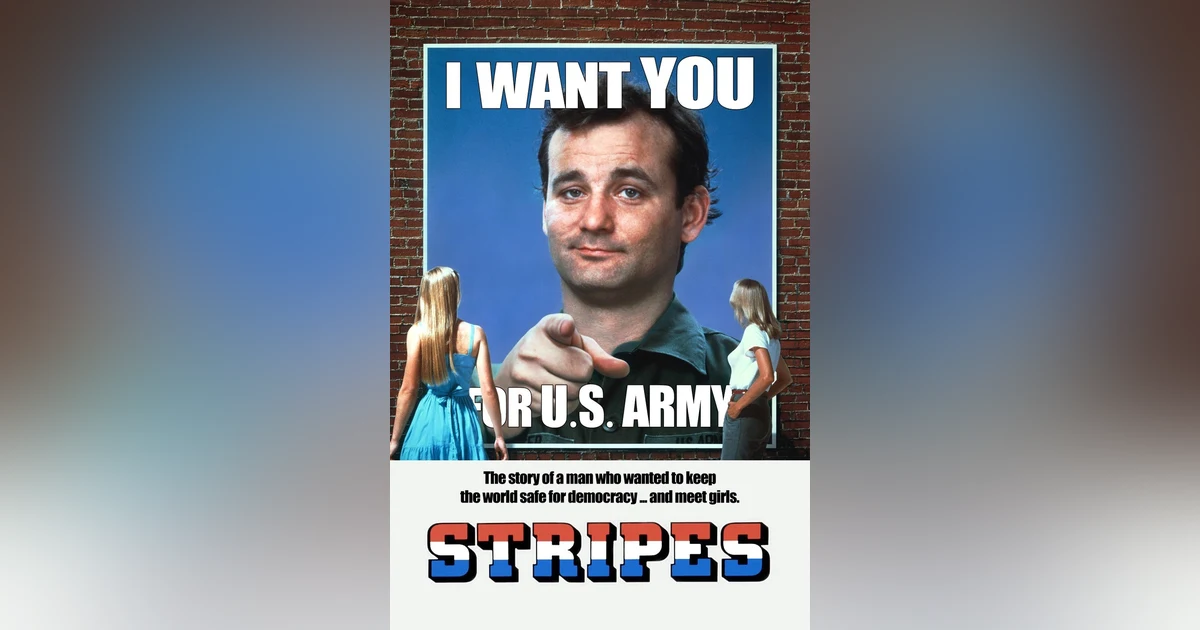


"Stripes" (1981), directed by Ivan Reitman and starring Bill Murray and Harold Ramis, is a quintessential early '80s comedy that perfectly captures the zeitgeist of an era that teetered between the absurdity of the Cold War and the ever-relaxing social mores. At its heart, "Stripes" is a comedic rebellion against the rigidity of military life, making it a film that resonates with the themes of individualism and anti-establishment sentiment prevalent at the time.
The Plot & Characters
The film follows the misadventures of John Winger (Bill Murray), a down-on-his-luck cab driver who, in a fit of existential despair, convinces his friend Russell Ziskey (Harold Ramis), a mild-mannered English teacher, to join the Army with him. Their journey from slackers to slightly less inept soldiers forms the crux of the story. Murray's portrayal of Winger is a masterclass in comedic timing and deadpan delivery, embodying the everyman who finds himself at odds with authority at every turn.
Harold Ramis' Russell is the perfect foil to Murray's antics. His subtle and intelligent performance balances the overt slapstick and provides a grounding presence amidst the chaos. Together, they stumble through basic training under the watchful eye of their beleaguered sergeant, played by Warren Oates, who embodies the archetypal tough-as-nails drill sergeant with a secret soft spot for his bumbling recruits.
Cinematography & Direction
Ivan Reitman’s direction in "Stripes" is both savvy and unpretentious. He allows the comedic talent of his cast to shine through, using a straightforward cinematic style that keeps the focus firmly on the characters and their shenanigans. The film is shot with a traditional approach that eschews flashy techniques for steady, well-composed scenes that support the comedic narrative without overshadowing it.
Cultural Impact & Relevance
"Stripes" came out at a time when America was dealing with the hangover from Vietnam and general scepticism about military interventions. The film taps into this sentiment by portraying the Army as a place where the misfits and the rebels not only fit in but thrive in their ridiculous ways. This subversive undercurrent helped "Stripes" resonate with a generation that was disillusioned with authority, making it a staple of 1980s cinema and a cultural touchstone for discussions about conformity and rebellion.
Moreover, the film’s influence can be seen in the way it helped to define the comedy genre for the decade. It paved the way for a type of humour that is both irreverent and introspective, giving rise to the careers of its leads and influencing other comedic works that followed.
Humour & Writing
The humour in "Stripes" is both overt and subtle, blending slapstick with witty dialogue that mocks the seriousness of military conventions. Bill Murray's irreverent character is constantly skewering the absurdity he encounters, whether it's questioning why any sane person would want to be a soldier or improvising one of his many irrepressible speeches that rally his fellow underdogs to his cause. The script, co-written by Harold Ramis, Len Blum, and Daniel Goldberg, is sharp and full of memorable lines that have entered the pop culture lexicon, like the classic "That's the fact, Jack!"
The screenplay also smartly uses its comedic elements to develop its characters, making them more than just caricatures. We see genuine growth in John and Russell, who, despite their initial lack of direction, find something resembling pride and purpose in their service, albeit in their typically unconventional ways. This transformation provides a satisfying narrative arc that balances the film’s sillier moments with moments of genuine character development.
Impact on Pop Culture
"Stripes" also serves as a prime example of how comedy can reflect and influence societal attitudes. Its enduring popularity underscores its effectiveness at capturing the spirit of its time and offering a form of escapism while also providing commentary on real-world issues. The film's legacy can be seen in how it influenced the structure and tone of future comedies, which often adopted its blend of humour, heartfelt moments, and critique of authority.
Additionally, "Stripes" is notable for its soundtrack, which complements its comedic and thematic elements perfectly, enhancing the film’s atmosphere and reinforcing its light-hearted take on serious matters. The iconic scene of the platoon marching to a non-traditional cadence is just one example of how music and sound play integral roles in the film’s appeal.
Relevance Today
Watching "Stripes" today, it’s fascinating to see how its themes of challenging authority and finding individuality within a conformist setting resonate in a contemporary context. The film speaks to the timeless struggle between personal freedom and institutional demands, making it as relevant now as it was in the 1980s. For new viewers, "Stripes" offers a snapshot of a particular moment in American history, both socially and culturally, while for others, it remains a nostalgic favourite that reminds them of their youthful rebelliousness.
Final Thoughts
Overall, "Stripes" is more than just a comedy. It's a culturally significant film that offers a critique of military life through the lens of humour, making serious points about personal autonomy, friendship, and the absurdity of rigid institutions. Its continued relevance and popularity make it a standout film of the 1980s and a significant part of the comedy genre's history.
In conclusion, "Stripes" is a must-watch for fans of classic comedy and those interested in a humorous yet insightful look at military life and personal rebellion. Its successful blend of humour, character development, and cultural commentary ensures that it remains an important and beloved film, resonating with audiences and influencing filmmakers decades after its release. Whether you're revisiting it or seeing it for the first time, "Stripes" offers both laughs and a thoughtful reflection on the clash between individuality and conformity, making it a timeless piece of cinema.
Please follow the Podcast and join our community at
https://linktr.ee/borntowatchpodcast
If you are looking to start a podcast and want a host or get guests to pipe in remotely, look no further than Riverside.fm
Click the link below
https://riverside.fm/?utm_campaign=campaign_1&utm_medium=affiliate&utm_source=rewardful&via=matthew

If you ask Bones what the greatest decade in cinema was, don't expect a debate. The answer is the 1980s, and he'll happily spend the next three hours explaining why. If it stars Stallone, Schwarzenegger, Norris, Van Damme or Kurt Russell, chances are he's seen it dozens of times and can quote half the script from memory.
A lifelong mate of Whitey, Gow and Dan, Bones has been part of the Born to Watch story long before there was a podcast. Having grown up and gone to school together, he's been arguing about movies with the boys since VHS tapes were cutting-edge technology. Becoming a recurring guest host was simply the next chapter.
While his heart belongs to 80s action cinema, there's one franchise that sits above them all, Star Wars. Bones' love for a galaxy far, far away borders on obsession. He's proudly held onto his original childhood Star Wars toys, knows more lore than should be humanly possible, and can answer questions about characters you've never even heard of. If there's a Star Wars debate, Bones is already preparing his evidence.
Unlike the rest of the crew, Bones actually does his homework. Weeks before recording an episode, he's already watched the movie, read the trivia, researched the production and probably found three behind-the-scenes facts nobody else knew. It's a level of preparation that's both impressive and mildly concerning.
Whether he's passionately defending another forgotten 80s action classic, correcting someone's Star Wars facts or remindi… Read More


