Boogie Nights (1997)
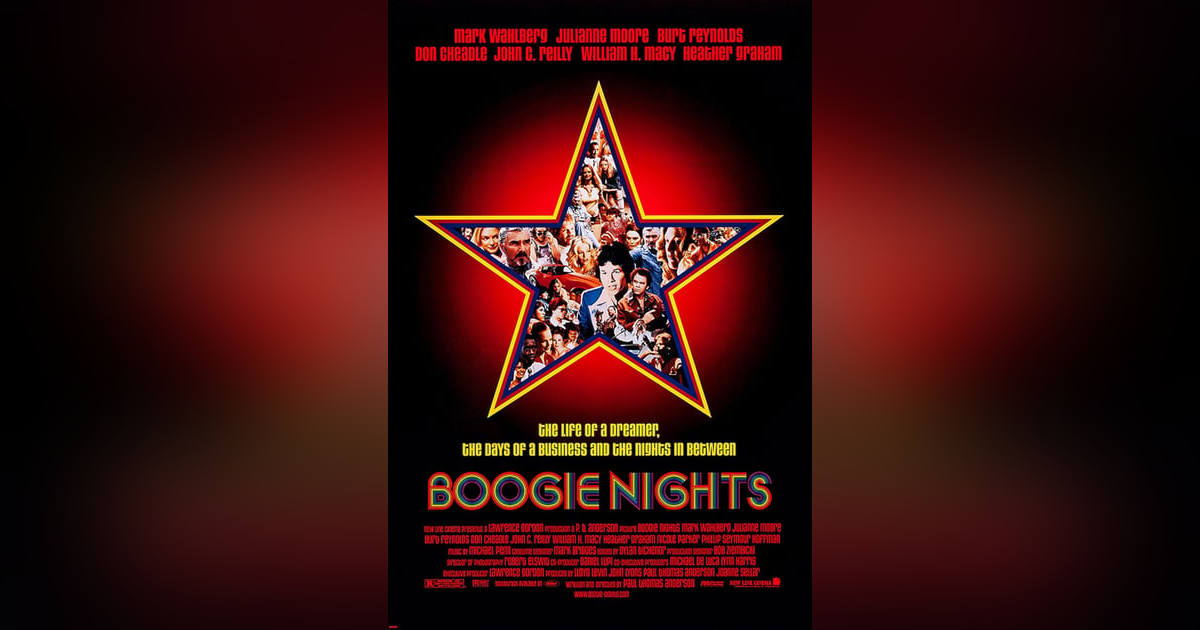
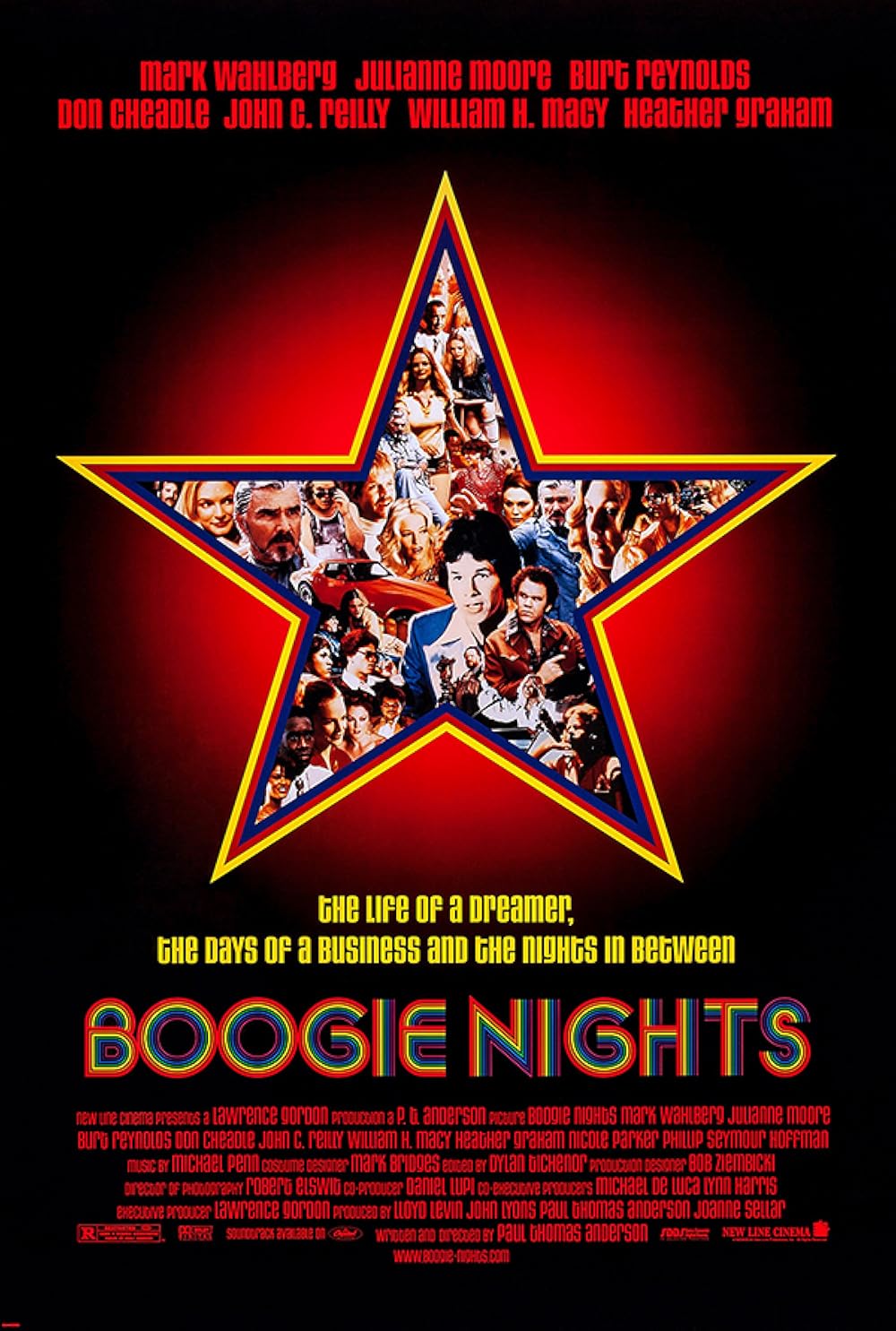


Boogie Nights 1997 Review: 200 episodes in, and Born to Watch hits a milestone with a film that feels weirdly, uncomfortably autobiographical.
From the moment Whitey declares this the perfect way to celebrate the show's 200th episode, it's clear this isn't just another movie review. Boogie Nights is loud, chaotic, hilarious, messy, strangely heartfelt and absolutely stacked with characters who think they're on top of the world until reality comes crashing in. In other words, it's the ideal Born to Watch film.
Set against the late-70s and early-80s adult film industry, Paul Thomas Anderson's second feature is a sprawling ensemble piece that follows the rise and fall of Eddie Adams, reborn as Dirk Diggler. Mark Wahlberg's breakout performance anchors the film, but this is never just Dirk's story. It's about a group of outsiders who form a surrogate family, chasing success, validation and meaning, until excess, ego and changing times pull them apart.
The boys dig into the idea that Boogie Nights is really two films stitched together, the euphoric disco-soaked rise of the 70s, followed by the darker, cocaine-fuelled collapse of the 80s. It's a tonal shift that mirrors the characters' journeys, from optimism and community to paranoia, loneliness and self-destruction. When Little Bill exits the film, everything changes, and the show explores how that moment symbolises the end of innocence for the entire group.
There's plenty of love for the ensemble cast. Burt Reynolds' Jack Horner is discussed as both mentor and flawed father figure, a man clinging to an artistic vision while the industry evolves without him. Julianne Moore's Amber Waves is heartbreaking and layered, especially when the conversation turns to her custody battle and the illusion of freedom within the industry. John C Reilly, Philip Seymour Hoffman, Don Cheadle, Heather Graham and William H Macy all get their flowers, with Hoffman's painfully awkward Scotty and Macy's tragic Little Bill standing out as performances that linger long after the credits roll.
As always, the Born to Watch humour cuts through the heavy themes. There's banter, self-reflection, side-tracking, and more than a few laughs at the absurdity of certain scenes, including the legendary Alfred Molina drug-deal sequence, which the team agrees is one of the most anxiety-inducing moments PTA has ever put on screen.
The episode also looks at Boogie Nights in context, how it landed in 1997 alongside juggernauts like Titanic and LA Confidential, why it underperformed at the box office, and how it grew into a cult classic that feels even richer with repeat viewings. It's a film you can dip in and out of, catch individual scenes, and still be completely absorbed.
Ultimately, this Boogie Nights 1997 Review becomes a celebration, not just of the film, but of the journey Born to Watch has been on for 200 episodes. It’s messy, honest, occasionally inappropriate, and full of love for movies that take big swings.
And really, what better way to celebrate than strapping on the roller skates and heading back to the Valley?
BORN TO WATCH – JOIN THE CONVERSATION
- Is Boogie Nights Paul Thomas Anderson’s most rewatchable film?
- Does the movie completely change once the 80s arrive?
- Which character hits hardest on a rewatch?
Listen now on Spotify, Apple Podcasts, or at BornToWatch.com.au
#BornToWatch #BoogieNights #PTA #MoviePodcast #FilmDiscussion #CultCinema #1990sMovies #MovieReview #PodcastLife #200Episodes


